Three Potentially Disruptive 3D Printing Cases
Gregory John Lee

Vernon Timothy Thaver

From

3D printing of human organs, precious metals, & buildings
Main area: Ingredients of technological disruption, business models
Other areas: Technology in business (3D printing)
Research to end 2024
3D Printing Cases
These three mini-case studies are particularly designed to help the reader to apply the principles of disruptive innovation to real-world, potential disruptions. We have chosen to use three additive manufacturing (3D printing) examples, namely printing of human organs, of precious metals, and of buildings. These three diverse contexts, which may be disrupted by this common technology, help to illustrate and challenge the reader about the elements of disruptive innovation and can help illustrate this interesting technology.
Typically, the reader (or instructor) will choose one of the three cases to work on, based on their interests or industry, rather than working though all three. If the reader is not in one of these industries directly, they can either place themselves in the context as a thought exercise or consider tangential interests (for instance, readers in finance or banking can approach these cases as a potential investment or loan situation).
3D Printing of Human Organs
Introduction to the Human Organs Printing Case
The medical world has long embraced 3D printing for a variety of uses. Many readers will be familiar with technologies such as 3D printed teeth for implants, prosthetics that are 3D printed for better fit, and other such uses. Figure 1 shows two examples.
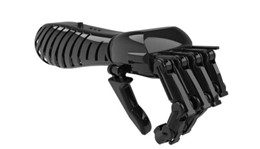
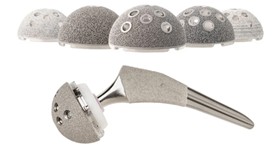
Figure 1: Two examples of 3D printed medical devices – a prosthetic and hip implants
However, many people are surprised to hear that the 3D printing of living internal and external human organs has been in development for some time, ranging from hearts to ears, bladders, kidneys, livers, skin, and colons. This innovative technology could disrupt multiple markets, ranging from transplants to medical research and more.
The following sections discuss the underlying market and its challenges, how 3D printing is increasingly working on the issue of organ creation, what the challenges are, and the final subsection challenges the reader to consider this innovation in the light of the previous material.
The “Market” for Human Organs and Its Problems
Human organs are used in a variety of medical areas, most notably (3DSourced, 2024):
- Organ transplants and repair: The most well-known and urgent use is the organ transplant market, which is generally necessary for the saving of lives. Tissue repair is also an application in this area, such as skin grafts for burns or replacement of specific heart valves as opposed to replacing the entire heart.
- Medical and other research: Another prime use for organs is the lesser-known world of medical and pharmaceutical research, which needs organs to test treatments on or for other research requirements. Even cosmetics testing is done on organs such as skin or eyes.
- Teaching: A third area is medical school teaching, which could be done using printed organs instead of having to draw on limited supplies.
Of course, it is widely known that there is a scarcity of viable human organs, leading to a large number of deaths from patients who never received an organ in time. For instance, in the US alone, more than 120,000 people are awaiting organs at any time (3DSourced, 2024). There is also often a very long waiting time for organs even for those lucky enough to get one: 3DSourced (2024) reports that UK patients wait on average 1,085 days for a heart, and US patients wait 3.6 years for a kidney. These long wait times lead to significant quality of life issues for waiting patients (Abouna, 2008) and frequent death (e.g., over 6,000 people die annually in the US while waiting, Sutter, 2022).
Another major issue with the market for organs is the darker side of illegal organ trafficking, including organ theft and the sale of organs by economically desperate individuals to black market buyers (Columb, 2020). Such markets thrive on the scarcity and acute need discussed above.
The Technology Behind Organ 3D Printing
The concept behind 3D printing of organs has been around since as early as 1988 (Flynt, 2020). The technology driving 3D organ printing generally involves two elements. First, a printable material (“bio-ink”) is created from human cells suspended in some form of printable material. These cells are sometimes taken from the patient (Sunny, n.d.), or sometimes donated or bought. The cells can often be stem cells which is the foundational human cell that is capable of turning into any other cell (Flynt, 2020).
The material in which the cells are suspended can be made of a variety of materials, such as hydrogel, collagen, gelatin, or others (Sunny, n.d.). More details regarding the material are beyond the scope of this case, although improvements in such materials are important as they can dictate what can be achieved with the printing (3dstartpoint, n.d.).
Once the material is prepared, the organ is printed from the material, layer by layer. There are various techniques to achieve this, with one example being to extrude (squirt) the cell material in layers (similar to a method called fused deposition modelling which we discuss in Lee & Armstrong, 2023).
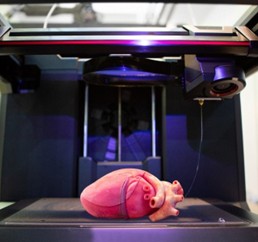
Figure 2: Miniature 3D printed heart
Source: DocWire News (2019)
There are several variations on such methods (e.g., Sunny, n.d.).
Figure 2 shows an example of a 3D printed heart, noting that this is a very small design that could not be transplanted into a person (Sunny, n.d.; Flynt, 2020).
The printed organ is then generally incubated to allow the cells to grow and be observed by the scientists. Once a viable organ has resulted, it is then either transplanted into or onto the patient or used for research or teaching.
Unfortunately, it is not that easy, otherwise the technology probably would have disrupted by now.
There are a variety of challenges holding up the 3D printing of human organs (e.g., Rogers, 2023):
- Scientists have printed simpler organs, but more complex organs are currently still under development, especially those with complex inner structures. A major challenge is creating organs with the ability to get enough blood for sustainability, with one of the issues in this regard being creating veins for blood to flow through (Flynt, 2020).
- Keeping the organs viable is still a challenge. In some of the attempts and techniques attempted to date, the organs have died after a few days.
- 3D printed organs can develop cancer (e.g., Vermeulen et al., 2017).
As stated by Professor Chua Chee Kai from Singapore University of Technology and Design (Clarke, n.d.):
While 3D bioprinting is still in its early stages, the remarkable leap it has made in recent years points to the eventual reality of lab-grown, functional organs. However, to push the frontiers of medicine we must overcome the technical challenges in creating tissue-specific bio-inks and optimizing the tissue maturation process. This will ultimately have a huge impact on patients’ lives, many of whom may be reliant on the future of 3D bioprinting.
In fact, at least one leading scientist believes the technology could take several more decades before it achieves mass application in transplants (Flynt, 2020). In a slightly more positive perspective, Jennifer Lewis, a professor at Harvard University’s Wyss Institute for Biologically Inspired Engineering notes (Rogers, 2023):
The field’s moving fast, but I mean, I think we’re talking about a decade plus, even with all of the tremendous progress that’s been made.
Therefore, this is a nascent innovation, with more use currently in research and teaching and little in the transplant arena.
Early Implementations of 3D Printed Organs for Transplant
A few real examples involving final transplant successes have been achieved to date, which increasingly illustrate the promise of this technology.
In one example, a child in the US was given a 3D printed trachea grown from her own stem cells (3dstartpoint, n.d.). In another example, the Wake Forest Institute has successfully grown and implanted 3D printed bladders, also grown from the patient’s own cells. These organs saved the lives of three children, but were made using a particularly difficult process (Rogers, 2023). Also, in 2018, a University of Newcastle team successfully 3D printed human corneas (Clark, n.d.).
3D printed skin is an area of this technology which may be closer to widespread implementation than some of the more complex organ types. In a particularly dramatic example, Isabella “Pippie” Kruger, a young South African girl, became a notable example of 3D printed skin transplants. In 2017, she became the world’s first patient to receive 3D printed skin grafts. On New Year’s Eve, Pippie’s father was lighting a “braai” (barbeque) when a bottle of gel firelighter burst, severely burning her. She sustained third-degree burns which were 80% full thickness. Her physicians estimated her chances of survival at 3% (du Plessis, 2022).
Pippie’s parents and physician turned to the nascent possibility of 3D printed skin to try to save her life. This required creating a skin graft tailored to her unique skin cells. To get a sufficient sample of Pippie’s skin, they had to remove a sample of the little skin remaining (du Plessis, 2022).
The skin was cultivated by Genzyme-Sanofi, a US-based pharmaceutical company which owns the rights to the Epicel skin-growth technology. Epicel extracts stem cells from small patches of the patient’s healthy skin, which are then placed onto a layer of inactive mice cells and fed with a specialized mixture that allows them to grow into thin skin layers that can be used to treat and cover burns. Such 3D printed skin is able to treat patients with deep dermal or full-thickness burns that cover more than or equivalent to 30% of their body surface area, whether they are adults or children (du Plessis, 2022).
Once the skin graft had completed its cultivation, it was transported back to Johannesburg for the surgery. As Pippie’s body gradually adapted the graft and her quality of life improved, her successful surgery demonstrated the revolutionary potential of 3D printing technology in regenerative medicine (du Plessis, 2022).
Figure 3 shows a picture of Pippie at the time and 11 years later.


Figure 3: Pippie Kruger’s skin after the first skin grafts, and her 11 years later
Sources: Child (2012), Witepski (2022)
Pippie Kruger’s case has raised awareness of the value of individualized medical care and encouraged more research into the use of bioprinting for skin and other tissues.
Recent Advancements
There have been a number of major advancements in 3D printing of organs, as well as some important surgical applications.
In 2023, Dr. Arturo Bonilla successfully implanted a 3D-printed outer ear into a patient born without one. The outer ear was created from live cells, and Dr. Bonilla’s surgery marked the first implantation of a 3D bioprint derived from live cells into a human (Barber, 2023). Catarino et al. (2023) also offer advancements in 3D bioprinting skin tissues, creating skin tissues that developed structures similar to hair follicles once the bioprinted tissue had matured, and Avelino et al. (2024) further this by drawing attention to skin layers that have previously been overlooked in the development of full-thickness 3D bioprinted skin.
These technological advances are being pushed further by technical advances. For example, researchers at Penn State University developed a high-throughput bioprinting technique in 2024 that proved to be 10 times faster than other existing techniques, with bone reforming over approximately 96% of the affected area in 6 weeks (Kim et al., 2024).
The Disruptive Potential for 3D Printed Organs
Obviously, there exists significant potential for 3D printing to disrupt the organ transplant “market” in a variety of ways:
- Organs can be produced on demand and far, far faster than the current wait times for an organ.
- In the case of transplants, organs that are produced from cells drawn from the patient’s own body, or from stem cells with a high genetic match, have a much higher chance of acceptance than a transplanted organ from a donor.
- Since the organs are not invasively acquired, aside from the relatively benign process of gathering the cells, they probably involve far fewer negative consequences for individuals or other societal groups. Organ donation, for instance, can be a stressful consideration for bereaved families in the case of acquisition from deceased individuals. In the case of living donors, the loss of an organ is inevitably medically negative (e.g., Rogers, 2023). As another example, cosmetics testing could be done on living 3D printed skin in the future (3DSourced, 2024).
- Furthermore, advancements in bioinks and the ability to print complex vascular structures have propelled the field forward, allowing for the creation of functional tissues that can mimic natural organ physiology. This capability could lead to the development of not only organs but also tissues for drug discovery and development and disease modeling (Yang et al., 2024), thereby advancing pharmaceutical research and reducing reliance on animal models (IBEC, 2022). Moreover, the integration of 3D printed structures in surgical planning and education offers surgeons the opportunity to practice intricate procedures on life-like models, enhancing their skill and improving patient outcomes (Alqadi et al., 2024; Beedle, 2024), and is being optimized with the use of AI (Schwaar, 2024).
- Future developments could see 3D printed organs moving toward clinical application, fundamentally changing the landscape of healthcare. As research continues to overcome current limitations such as biomechanical properties and long-term viability, 3D printed organs may become a standard part of medical practice, significantly improving the quality of life for patients in need of transplants.
- Of course, a fully deployed 3D organ printing market would potentially eliminate black market trafficking of organs.
- From the perspective of healthcare practitioners, the possibility of 3D printed organs promises to fundamentally disrupt their practices, allowing them to move from a predominantly palliative approach (treating and mitigating symptoms with relatively few patients ever getting cured through transplants) to a predominantly treatment-focused approach where specialists get to do far more surgeries. This would also disrupt healthcare infrastructure, which currently is designed for far more palliative care and far fewer surgeries.
- Pharmaceutical companies would find their demand fundamentally affected, with potentially major decreases in certain drugs used to treat long-term conditions which could now be resolved through speedy surgeries.
However, the technical challenges discussed above would have to be resolved, as well as other considerations, before true disruption would be achieved. One of the questions is how much the organs and complete procedure would cost. It is these elements that the reader is going to be challenged to consider at the end of the case.
3D Printing of Precious Metals
A second area of potential disruption using 3D printing is the printing of precious metals.
Introduction to the Precious Metals Case Study
As will be discussed below, precious metals have a wide variety of uses, ranging from the relatively simple to complex use in industrial processes and products.
The following sections discuss a specific example of this type of material, namely, the 3D printing of platinum group metals (PGMs). We cover the uses for PGMs and challenges therewith, a particular 3D printing project in the platinum and related metals space, and the challenge posed to the reader.
Platinum Group Metals: Uses and Challenges
Platinum group metals (PGMs) comprise a family of metals that are generally mined together, namely platinum, palladium, rhodium, ruthenium, iridium, and osmium.
PGMs have many desirable properties, such as good resistance to heat and corrosion, high melting points, and they can act as catalysts in a variety of chemical processes (Nose & Okabe, 2014). As a result, PGMs have a wide number of uses:
- The largest deployment of PGMs is as a catalyst in the construction of catalytic converters which are used to clean the emissions of petrol vehicles (Bell, 2018). This use will diminish as electric vehicles (EVs) become more prevalent, since EVs have no emissions and do not need catalytic converters.
- However, PGMs have many alternative uses, including platinum jewelry and uses in diverse industrial products such as circuit boards, aerospace components, fuel cells, medical devices, fingerprinting ink, and many others (Scott, 2017). The International Platinum Group Metals Association estimates that a quarter of all products either directly include a PGM in their material make-up or were manufactured using a PGM in the production process (Bell, 2018).
PGMs are relatively rare, with only approximately 200 tons being mined per year, which renders them precious and expensive and high in price (Nose & Okabe, 2014).
Traditional methods for manufacturing with PGMs have various issues. Such methods could range from using molds, which involves pouring liquid metal into a mold shape and letting it harden, stamping or carving designs from basic shapes like sheets of the metal, and others. Issues with such methods can include difficulty, expense, and waste:
- For instance, molds are particularly expensive, as the metal must be melted – and molds are expensive to produce and must be replaced.
- Many of the methods are inflexible: once they have been set up, they cannot be adjusted to produce different shapes. For instance, stamping or molding requires the creation of fixed-shape parts (stamps and molds).
- Some methods produce waste such as cutting dust or offcuts, which in the case of metals can often be recycled but not always. Since PGMs are phenomenally high in price, waste is expensive.
- Finally, some desired shapes cannot easily be produced using traditional methods. Shapes with complex inner shaping and cavities are particularly difficult to produce in traditional ways.
With the above limitations in mind, the 3D printing of such metals has much potential. First, the technology can improve on many of the above technical limitations (as discussed in the next section). In addition, mining companies and countries – particularly developing nations – have often been criticized for merely extracting commodities such as PGMs for sale in international commodity markets but failing to beneficiate these commodities into finished or intermediate goods (e.g., the jewelry or industrial products mentioned above) which would garner more trade value and profitability. 3D printing can help such companies and countries beneficiate commodities such as PGMs with enough entrepreneurial vision and trade or business acumen.
The 3D printing potential for PGMs is discussed next.
3D Printing of Platinum Group Metals
PGMs have not been 3D printed in any systematic way to date; however, the technology has been developed, and initial pilot projects have been initiated as discussed below.
An example of the development of this technology is the PlatForum project at Lonmin mining group in South Africa (now owned by Sibanye-Stillwater). In 2016, PlatForum was formed as a collaboration of three universities and Lonmin. The prime aim of the consortium was to work on a joint project to 3D print PGMs.
South Africa is a rich mining ground for PGMs: as noted by Pistilli (2024):
The Bushveld Complex is the largest PGMs resource in the world, and represents approximately 75 percent and 40 percent of annual global production of platinum and palladium, respectively.
PlatForum deployed a methodology under the additive manufacturing approach known as selective laser sintering (SLS), also referred to as selective laser melting, in which a power is burnt into successive layers by a laser. There was no established methodology for producing a printable PGM powder, so PlatForum’s first step was to develop such powders. They successfully achieved the powder production techniques within the first year of the project, an example of which is shown in Figure 4.
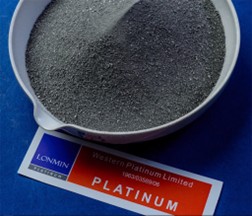
Figure 4: Powder developed for 3D platinum printing
Then, using an adapted standard SLS machine, PlatForum’s initial prototypes began to be developed in 2017.
PlatForum started with platinum jewelry as seen in Figure 5 below.
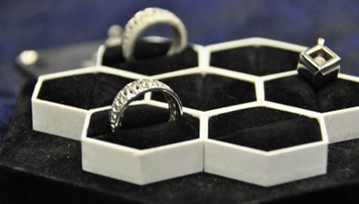
Figure 5: 3D printed platinum jewellery
Subsequently, Lonmin was acquired by Sibanye-Stillwater, which has continued with the project although without great fanfare. Regarding Lonmin, which was acquired by Sibanye-Stillwater in 2019, there has been a noticeable focus on integrating advanced technologies, including 3D printing, within its operations and future projects. While specific projects related to 3D printing of precious metals from Sibanye-Stillwater have not been extensively publicized, the company has expressed an interest in transferring surface digital technologies like 3D printing, blockchain, and AI into an underground environment (Mining Indaba, 2019).
Developments in the 3D printing of precious metals, including gold and silver, have continued to evolve, with advancements in processes such as selective laser melting and binder jetting showing promising results for producing intricate and customized jewelry, dental implants, and electronic components (e.g., Becher, 2024; Jeong et al., 2023; Ling et al., 2024).
The 3D printing of PGMs as achieved by Lonmin and others (see below) has the potential to improve many of the processes and resolve many of the challenges discussed above:
- 3D printing is often more efficient than traditional methods in terms of issues such as waste (SLS is not waste-free, as discussed above, but can often improve on this issue substantially).
- 3D printing is very flexible. To change a design merely requires a change in the digital design file, and then, so long as the material and machine can support the new shape (which in the case of SLS is usually true), then the new print can be achieved with little delay.
- 3D printing can produce far more complex shapes than many of the traditional techniques.
- This solution can help mining organizations to beneficiate their minerals with the right combinations of innovative thinking and business models.
As stated by Wilma Swarts, head of marketing at Lonmin and director of PlatForum at the time of the initial innovation (Scott, 2017):
Through additive manufacturing, intricate and lightweight PGM products can be manufactured at speed, presenting new opportunities.
The AMFG (2018) report on precious metals printing elaborates on these advantages:
3D printing platinum is a particularly interesting use case. The material is notoriously difficult to cast because of its high melting temperature and high reactivity with the crucible and investment mould materials. This results in high production costs, the need for specific equipment and frequent defects in final products, making laser sintering a better alternative to casting.
Of course, this is not a perfect solution. Producing the printable powder is a difficult process that adds a complex step, and powder waste can occur in SLS. There is significant post-processing required (e.g., because the initial print is rough, the products need smoothing through means such as sanding or filing). The solution is limited to shapes that can fit on the print platform, which may rule out larger products. However, these limitations may often be less than those experienced with any traditional method.
The PlatForum project is by no means the only attempt to turn additive manufacturing technology to the problem of precious metals, for instance, see AMFG (2018) for a variety of other projects.
3D Printing of Buildings
Our final example is the 3D printing of buildings, which is obviously a large-scale endeavor. The following sections describe the status quo of the traditional building industry, how the building industry can deploy 3D printing, the disruptive potential of the technology in the building industry, issues with this approach, and the challenge the reader may take away in addressing this case study.
The Traditional Construction Industry
The building industry is obviously millennia old, having weathered the stone, bronze, and iron ages to the current day.
Builders in the modern age largely rely on long-established methods largely involving brick, cement or concrete plus steel, or timber construction. Buildings are designed on a more or less bespoke basis by a combination of professionals, including architects for aesthetic and functional design, engineers for the planning of the construction, land surveyors for the site surveillance, builders to execute the construction, and others. The building process is largely manual, with workers augmented by machinery which is largely dedicated to moving the building materials (e.g., cranes, earth movers, etc.).
The building industry has been slow to change over the centuries of its existence. In terms of the fundamental building process itself, it still employs many of the same techniques developed centuries ago. However, there are burgeoning issues with this industry, including the following:
- Expense: Building has become progressively more expensive. While a lot of this expense has to do with fixtures, which will not easily change, other cost factors include the costs of material and construction personnel. For instance, Figure 6 shows construction inflation over the past two decades.
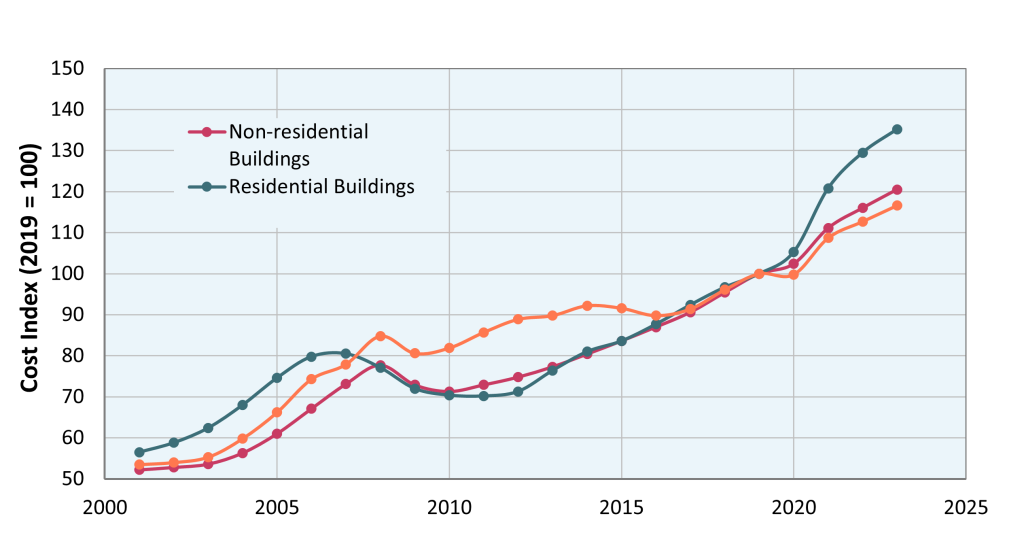
Figure 6: Increase in building costs 2001-2023
Source: Zarenski (2024)
- Quality: Building quality can vary greatly. While local, regional, and national governments typically create rigorous building standards, compliance monitoring and inspection are difficult, especially for under-resourced developing economies (although building calamities occur in rich, developed nations too). This can lead to poor building by unscrupulous or cost-squeezed contractors, which is particularly problematic in the low-income housing market where buildings are often defective or even structurally dangerous (e.g., Aigbavboa & Thwala, 2013; Haddad et al., 2022; Mazibuko et al., 2021; Ogbu, 2017). Figure 7 shows the 2021 collapse of the Chaplain Towers apartment block in Miami, which also demonstrates that developed nations are not immune to this issue.

Figure 7: 2021 collapse of the Chaplain Towers apartment block in Miami
Source: Barton et al. (2021)
- Injuries & fatalities: Construction is, unfortunately, an industry with relatively high levels of injuries and fatalities (e.g., Birhane et al., 2022).
- Form limitations: Most modern buildings are built with straight walls and corners as this is the easiest to achieve with conventional techniques. As discussed below, this is in fact a limitation that has disadvantages.
- Sustainability: Conventional building has various negative impacts on the environment, for instance, modern concrete has high CO2 emissions, traditional construction produces considerable waste, and conventional building designs are not thermally optimal and therefore require considerable climate control which has negative environmental effects.
- Other labor issues: Building has its share of labor issues, which can affect project timelines as well as quality. For instance, certain key construction skills are often scarce, although this can depend on location (e.g., Fernando et al., 2016; MacKenzie et al., 2000; Watson, 2007; Windapo, 2016). Building employees may be unionized, which helps to protect them but can also render projects subject to strikes and the like.
With these issues in mind, 3D printing of buildings may be a tantalizing option offering a variety of methods and solutions as discussed next.
How Buildings Are 3D Printed
There are a variety of 3D printing methods to produce buildings, with diverse exciting opportunities. Since buildings are large-scale endeavors, the printers involved are large in size (“mega-printers”).
A common approach is a large-scale extrusion technique, in which a liquid building material (usually, a concrete composite or cement) is essentially squirted in layers to produce the inner structure of a building, which is then finished via more conventional techniques (e.g., plastering). Figure 8 shows a completed prototype of such a building, including the machine in process.
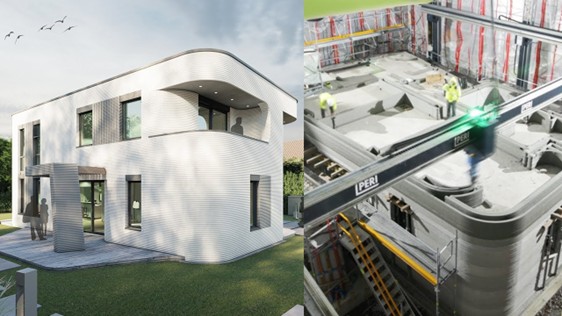
Figure 8: A 3D printed house, and the process
Figure 9 shows a close-up example of such a cement extrusion building process, which would create the essential structure but would require significant finishing.
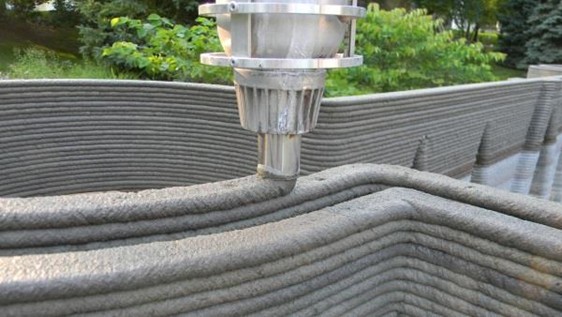
Figure 9: Close-up of a 3D building method using concrete extrusion
Another example of quasi-3D printing building is robotic machines that can lay bricks in layers, obviously bound together by some form of adhesive. Figure 10 shows such an example, namely the Hadrian X brick laying machine. Such machines are technically 3D printing due to their genesis in a CAD-type digital design; however, many might place them more in the industrial robot realm.
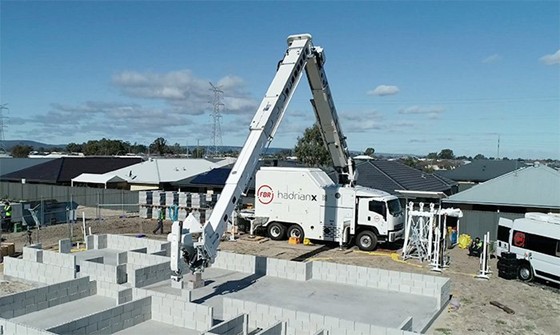
Figure 10: Example of the Hadrian X machine brick laying 3D printing technique
Source: FBR (n.d.)
There are other techniques available for 3D printing of buildings, see Yin et al. (2018) for a review.
Recent implementations in 3D construction have shown significant advancements in technology and its applications, particularly in creating affordable housing and sustainable building practices. Notably, companies like ICON and Apis Cor have developed 3D printing systems capable of constructing homes in a fraction of the time and cost of traditional methods (ICON, n.d.).
As more and more success stories emerge from 3D printing within construction, the more this new technology will be adopted globally. In response to this, it is integral to not only understand the techniques involved, but also where this technology can be utilized. To date, there are four main areas where COBOD printers have been successful:
Residential: from Single-Family to Multistory Homes
The primary focus of residential construction is to build living spaces for people, such as vacation homes, condominiums, and single-family homes.
While the cost of construction materials continues to increase, 3D-printed construction offers a more cost- and time-effective alternative. By using 3D printing in construction, costs can be by 30% (Tobi et al., 2018), 60% of time spent at the construction site can be saved, and 80% can be saved in labor (Morgan, 2023). For instance, Azure Printed Homes constructs entire units that are 3D-printed, modular, and prefabricated, which are made out of plastic bottles, highlighting that recyclable goods can be given a second home in someone’s home (Bonilla Huaroc, 2024). Azure Printed Homes repurposes approximately 150,000 plastic bottles to create their modular units, which are about 18 m2 and can be completed in 24 hours (Trujillo, 2024) Figure 11 is an example of residential homes built by Azure Printed Homes.

Figure 11: 3D building of residential homes from plastic bottles
Source: Florian (2024)
Social Housing: Creating Affordable, Sustainable Housing
Housing is a problem in many parts of the world, and many are homeless. Governments usually solve this problem by building social housing which is constructed with public funding and is meant for vulnerable groups of people with housing needs (e.g., DeGood et al., 2024). As it is publicly funded, the resources are not sufficient to cater for everyone with housing needs. In South Africa, for example, housing is especially a problem with millions of socio-economically disadvantaged citizens waiting for housing. The South African government successfully erected more than 235,000 fully subsidized houses in both 1998 and 1999, but this decreased to 34,000 in 2022 and 2023. The Department of Human Settlements blames budget cuts and the COVID-19 pandemic (Bourdin, 2024). Since the pandemic has subsided, the only barrier (as per the department) is funding, which could be tackled with the implementation of 3D construction printing. In the context of social housing, 3D printing techniques could reduce construction times by 70% (through efficient supply chains and automation) and material waste could be reduced by 60% (Boissonneault, 2025). This could be the solution South Africa and many other parts of the world need, and it is gradually being accepted globally (Boissonneault, 2025). An illustration of a 3D printed social housing plan can be found in Figure 12.

Figure 12: A 3D printed social housing plan
Office & Utility Building: Building Practical and Attractive Commercial Spaces
Office and utility buildings, which include warehouses, retail stores, and data centers, are important components of the commercial sector. Well-designed office spaces attract investors; therefore, visually appealing office buildings may help facilitate economic growth.
Figure 13 is an illustration of the first finished 3D building in the world, located in Dubai.

Figure 13: World’s first completed 3D building in Dubai
Source: Reuters (2016)
Infrastructure: Printing Essential Structures
Infrastructure construction includes structures that are essential for the functioning of the economy, industry, and society, such as transport systems and utility networks.
Given the importance of these structures, it is crucial to find reliable construction solutions. 3D construction printing with concrete produces structures that are as strong and sturdy as traditional methods at a faster pace. These projects can handle heavy loads and resist wear and tear, making them incredibly durable and long-lasting. The utilization of these technologies has begun – for example, Sperra, a US-based company focused on 3D printing concrete, has dedicated itself to using its technologies to develop critical energy infrastructure (Peels, 2024).
Advantages and Limitations of 3D Printed Buildings
3D printing of this nature has certain advantages over the traditional approaches to construction, although there are downsides and limitations as also discussed below. Some advantages include:
- Form flexibility: 3D printing can achieve building forms easily that conventional building either cannot easily do or that are costly and slow to achieve (Pessoa & Guimarães, 2020; Sakin & Kiroglu, 2017). Perhaps the most striking example is the fact that 3D printing can move us away from the rectangular form of almost all modern buildings. In this regard, Sakin & Kiroglu (2017: 706) note that:
It is a commonly understood truth that rectilinear forms (rectangular forms) are one of the weakest structural forms imaginable. On the other end of the spectrum, the humble egg, which is totally curvilinear, is one of the most efficient structures in nature. A minimum of material, crafted into a shape where there are no straight edges, providing simple consistent curve, makes it the strongest structural design possible. 3D printing offers the practical possibility of using these curves in common structures.
3D printing technology for construction is not, however, without limitations:
- Cost: Mega-printers 3D printers are expensive capital investments. Although their savings should justify these expenses for various construction firms, the up-front cost may be inhibitive for smaller contractors, who make up a large proportion of the industry (Sakin & Kiroglu, 2017).
- Machine integrity: 3D printers will need to be repaired and maintained, which takes them offline for those periods.
- Speed: Printers can be a slow construction method compared to conventional construction, although this is debatable. The speed of conventional construction is dictated by factors such as the size of the workforce, which varies. Also, 3D printers can operate continuously. The speed comparisons, therefore, are contextual (Sakin & Kiroglu, 2017).
- Size: 3D printing can only print structures big enough to fit within the machine’s parameters, which typically limits the achievable size.
3D printing in construction is in the very early stages, with only a few pilot projects completed. It is, however, widely expected to start disrupting the industry.
Challenges to the reader: 3D printing
Pick one of the three 3D printing cases in this chapter. If you are doing a course, your instructor might pick one for you.
In general, imagine that you are an organization interested in bringing this technology to the industry in your country:
- In the case of 3D printed organs, imagine you are an investor wishing to set up a laboratory that will print organs on demand for transplants. (It could be one specific type of organ). Note: you are NOT a business selling 3D printing machines. Your new business would set up the machines, cell processes, and so on to print the organs on demand for use in life-saving transplants. For this challenge, do not consider cosmetic surgery, you focus is on transplants in the case of failed organs.
- In the case of precious metals, imagine either that you are a mining company considering whether to implement 3D printing of the precious metals that you mine (as a side-business to their main business of extraction for commodity sale) or an organization seeking to help a mining company in this regard (e.g., a consultancy or financing organization).
- In the case of construction, imagine either that you are a construction company considering whether to implement 3D printing of buildings or an organization seeking to help a construction company in this regard (e.g., a consultancy or financing organization).
In none of the three cases – transplants, precious metals, or construction – has 3D printing fully disrupted. In each of the cases, it remains under development with interesting proofs of concept and initial use cases having been implemented, as opposed to your aim of making it a more common, standard way of doing things.
Address the following two challenges for your chosen case.
Application of the crucial triad model
Consider your chosen case and use the crucial triad model to consider how you could use this technology to disrupt the industry. See this download for the crucial triad model. Consider the following as part of your answer:
- Technology: You do not need to consider the technology much. Much of the technology will be developed by technology innovators and will be licensed by yourself as a company once it is mature enough. However, you might want to consider which pieces of the technology ecosystem you do need to deal with yourself. (Note, in some classes your instructor might suggest that you skip the technology discussion).
- Market demand: There are two things to do here.
- First, consider who is your primary market on which to focus your marketing and promotion efforts? There may be more than one constituency in the group of people to whom you are trying to sell, but who is the most key for you?
- Second, where might you encounter resistance in these groups to which you are trying to sell the technology solutions, and, if so, how would you overcome this resistance?
Two notes. First, your market are groups to which or through which you are directly trying to sell the product. Other constituents would fall under key partnerships in the discussion on business models below. Second, in trying to sell a product, end customers or users are not necessarily the only “market”. Sometimes they rely on others to help them in purchase decisions. For example, insurers may insure you and me, but insurance brokers may be the party that insurers spend most time trying to convince because the brokers help us to choose insurance.
- Business model: If you have enough time, you could consider the entire business model for your new business. However, in many instances, time is more constrained. In such instances, we recommend identifying just the few most important business model element problems that you need to solve to enable your new business to disrupt. All business model elements must be identified and solved for, but some are more pivotal than others. Note: although regulatory approval for the technology is clearly pivotal in some of the cases (especially the printing of organs), I suggest not choosing this as the main problem to solve. The logic is as follows. Regulatory approval is a known and usually fairly linear process. For instance, in medical procedures we know how to do clinical trials to show efficacy and the like. This step is expensive and effort-consuming, but you would assume you can gain regulatory approvals if you are diligent. Rather, there are more uncertain business model problems to solve. Which is the most key and how would you approach solving this issue?
You may need supplemental research to help with your reflections on the challenge.
Application of adoption models
Apply at least one well-known technology adoption model to your new business to discuss in more detail how you might persuade key recipients to adopt the 3D printing solutions. In the case of the human organs case, we suggest applying the persuasion factors from the Rogers’ Diffusion of Innovations model (see this document on technology adoption models).
Reflections on the 3D Printing Challenges
Reflection on the application of the crucial triad model
This reflection is available for sale here.
Reflection on the application of adoption models in the human organs case
Although there are many technology adoption models (see Lee & Armstrong, 2023), we think that the adoption part of Rogers’ Diffusion of Innovations (DOI) model contains many interesting discussions for the human-organs case (see Rogers, 2003, as summarized here).
Rogers suggests five factors that could help persuade individuals to adopt a certain technology , namely 1) relative advantage, 2) compatibility with existing processes or techniques, 3) complexity, 4) observability, and 5) trialability. We would principally apply these factors to a discussion on how to persuade surgeons and other specialists involved in recommending and implementing the transplants, since, these are your primary market to persuade.
Let us apply the Rogers’ DOI persuasion factors to the medical specialists in this case:
- Relative advantage. The value propositions discussion above, building on the potential future advantages of 3D printed organs in the future as discussed in the main case, enunciate the relative advantages. Note, however, that actually communicating these clearly to the specialists is key. (See Rogers, 2003, for more on communication channels as an essential element in adoption). You would want to compile and communicate clear clinical evidence of superiority of your technique, as well as use two of the below factors – namely observability and trialability – to concretize the sense of superior advantages for specialists.
- Compatibility with existing processes or techniques. Clearly, you would also want to convince surgeons that the grown organs are compatible with their existing techniques and training.
- Complexity. Clearly, you would probably not worry about the complexity of the concepts for medical specialists, since they are highly trained and will very likely understand all involved concepts. However, this may be an issue for patients, and the educational materials and testimonials discussed above will be designed to mitigate this.
- Observability. Rogers suggested that the ability to observe the technology in action prior to adoption would be a potentially important persuasion factor. In this regard, especially because specialists are small in number and well-known, you would want to undertake a number of initiatives in this regard early in your activities. For example, you could invite specialists to observe early clinical trials, and perhaps even invite them to observe early adopters implementing the surgeries (perhaps overseas).
- Trialability. This element takes observation one step closer by allowing users to actually try out the technology. You might invite specialists to rotate on the surgical teams when you do clinical trials, or offer the first organ free for trial once you begin production, so that you stimulate first usage.
Note that other adoption models, such as UTAUT2 and the TOE also add factors of interest (see Lee & Armstrong, 2023 and the download above); however, we deem the DOI used here to be the most applicable single-standing adoption model for this use case.
References: 3D printing cases
3DSourced. (2024, Feb 20). 6 exciting 3D printed organs & 3D bioprinting projects.
3dstartpoint. (n.d.). 3D printed organs: Current research and how they will work.
Abouna, G. M. (2008). Organ shortage crisis: problems and possible solutions.Transplantation Proceedings, 40(1), 34-38.
Aigbavboa, C. O. & Thwala, W. D. (2013). Residents’ perception of subsidised low-income housing in South Africa: a case study of Kliptown, Johannesburg. Journal of Human Ecology, 42(1), 17-23.
Alqadi, L., Issa, A., & Nasralla, A. (2024). Integrating 3D printing technology in surgical planning and prosthetic development: current application and future prospects. Archives of Medical Reports, 1(1), 34-39.
AMFG. (2018, Aug 16). 3D printing precious metals – a new approach?
Avelino, T. M., Harb, S. V., Adamoski, D., Oliverira, L. C. M., Horinouchi, C. D. S., de Azevedo, R. J., Azoubel, R. A., Thomaz, V. K., Batista, F. A. H., d’ Ávila, M. A., Granja, P. L., & Figueira, A. C. M. (2024). Unveiling the impact of hypodermis on gene expression for advancing bioprinted full-thickness 3D skin models. Communications Biology, 7, 1437.
Barber, C. (2023, Feb 16). 3D-printed organs may soon be a reality. ‘Looking ahead, we’ll not need donor hearts’. Fortune.
Barton, G., Bagenstose, K., Beall, P., Bajak, A., & Weise, E. (2021, Jun 24). Collapsed Miami condo had been sinking into Earth as early as the 1990s, researchers say. USA Today.
Becher, B. (2024, Jun 14). 3D printing metal: How does it work? Built In.
Beedle, J. (2024, Jul 12). Revolutionizing surgical planning with 3D printing. VA News.
Bell, T. (2018, Dec 10). Platinum Group Metals (PGMs). ThoughtCo.
Birhane, G. E., Yang, L., Geng, J., & Zhu, J. (2022). Causes of construction injuries: A review. International Journal of Occupational Safety and Ergonomics, 28(1), 343-353.
Boissonneault, T. (2025, Jan 24). 3D printed social housing is taking off internationally. VoxelMatters.
Bonilla Huaroc, C. (2024, Apr 10) The Rise of 3D-Printed Prefabricated Homes. ArchDaily.
Bourdin, J. (2024, May 27). ‘People have died on the waiting lists’: South Africa’s housing crisis casts a shadow over election. The Guardian.
Catarino, C. M., Schuck, D. C., Dechiario, L., & Karande, P. (2023). Incorporation of hair follicles in 3D bioprinted models of human skin. Science Advances, 9(41).
Child, K. (2012, Sep 14). Pippie to go home but her fight not over yet. Times Live.
Clark, E. (n.d.). 3D printing organs: How soon are bioprinting 3d printed organs coming? Allthat3D.com.
Columb, S. (2020). Trading Life: Organ Trafficking, Illicit Networks, and Exploitation. Stanford University Press.
DeGood, K., Weller, C. E., & Ballard, D. (2024, Sep 19). A new vision for social housing in America. American Progress.
DocWire News (2019, Aug 8). Research breakthrough brings scientists closer to 3D printing a human heart.
du Plessis, L. (2022, May 6). Pippie Kruger: a courageous stem cell success story. CryoSave.
FBR. (n.d.). Hadrian X.
Fernando, P. G. D., Fernando, N., & Gunarathna, M. A. C. L. (2016). Skills developments of labourers to achieve the successful project delivery in the Sri Lankan construction industry. Civil and Environmental Research, 8(5), 86-97.
Florian, M-C. (2024, Mar 18). Beta Realities creates 3D printed social housing system for ICON Technologies’ Initiative99. ArchDaily.
Flynt, J. (2020, Dec 7). 3D-printed organs: What they are and notable milestones. 3D Insider.
Glick, M. (2021, Jul 26). Why human foreskin is a hot commodity in science. Discover Magazine.
Haddad, S., Paolini, R., Synnefa, A., De Torres, L., Prasad, D., & Santamouris, M. (2022). Integrated assessment of the extreme climatic conditions, thermal performance, vulnerability, and well-being in low-income housing in the subtropical climate of Australia. Energy and Buildings, 272, 112349.
IBEC. (2022, Feb 4). Reducing animal testing with 3D bioprinting: European project BRIGHTER brings new light.
ICON. (n.d.). About ICON homes.
Indaba Mining. (2019, Dec 19). Technology is the key to the future of the South African mining sector.
Jeong, M., Radomski, K., Lopez, D., Liu, J. T., Lee, J. D., & Lee, S. J. (2023). Materials and applications of 3D printing technology in dentistry: An overview. Dentistry Journal (Basel), 12(1), 1.
Kim, M. H., Singh, Y. P., Celik, N., Yeo, M., Rizk, E., Hayes, D. J., & Ozbolat, I. T. (2024). High-throughput bioprinting of spheroids for scalable tissue fabrication. Nature Communications, 15, 10083.
Le, A. (2024, Aug 29). What is the cost of treating chronic kidney disease? Buoy Health.
Lee, G. J. & Armstrong, B. (2023). Digital Business Vol 1: Introduction to Digital Business & Technology (3rd Ed.). Silk Route Press.
Ling, S., Tian, X., Zeng, Q., Qin, Z., Kurt, S. A., Tan, Y. J., Fuh, J. Y. H., Liu, Z., Dickey, M. D., Ho, J. S., & Tee, B. C. K. (2024). Tension-driven three-dimensional printing of free-standing Field’s metal structures. Nature Electronics, 7, 671-683.
MacKenzie, S., Kilpatrick, A. R., & Akintoye, A. (2000). UK construction skills shortage response strategies and an analysis of industry perceptions. Construction Management and Economics, 18(7), 853-862.
Mazibuko, J. N., Simpeh, E. K., & Smallwood, J. (2021). Investigating building contractors’ compliance with national building regulations as a remedy to quality improvements in low-income housing. Journal of Public Administration, 56(4), 879-897.
Morgan, T. A. (2023, Jun 29). 3D printers promise cheaper and faster construction – but training needed first. IMechE.
Nasir, O. (2024, Dec 6). 3D-printed buildings: A sustainable solution or a fad? Parametric Architecture.
Nose, K. & Okabe, T. H. (2014). Platinum group metals production. In S. Seetharaman (Ed.), Treatise on Process Metallurgy Vol 3: Industrial Processes, pp. 1071-1097. Elsevier.
Ogbu, C. P. (2017). Building quality condition and maintenance cost: the case of public low income housing in Abia State, Nigeria. Journal of Construction Business and Management, 1(2), 24-34.
Peels, J. (2024, Nov 26). Sperra to 3D print energy infrastructure in California. 3DPrint.com.
Pessoa, S. & Guimarães, A. S. (2020). The 3D printing challenge in buildings. In J. Jurnitski & T. Kalamees (Eds.), E3S Web of Conferences: Vol. 172 (19005). EDP Sciences.
Pessoa, S., Guimarães, A. S., Lucas, S. S., & Simões, N. (2021). 3D printing in the construction industry -A systematic review of the thermal performance in buildings. Renewable and Sustainable Energy Reviews, 141, 110794.
Pistilli, M. (2024, Oct 29). Top 5 palladium- and platinum-producing countries. Investing News.
Reuters. (2016, May 24). This may be the world’s first functioning 3-D printed building. Entrepreneur.
Rogers, K. (2023, Mar 10). When we’ll be able to 3D-print organs and who will be able to afford them. CNN Health.
Rogers, E. M. (2003). Diffusion of innovations (5th ed.). Simon & Shuster.
Sakin, M. & Kiroglu, Y. C. (2017). 3D printing of buildings: Construction of the sustainable houses of the future by BIM. Energy Procedia, 134, 702-711.
Schwaar, C. (2024, May 22). AI-powered 3D printing redefines implant surgery. Forbes.
Scott, C. (2017, Nov 15). Collaboration leads to South Africa’s first platinum 3D print. 3DPrint.com.
Sunny, S. (n.d.). Pros and cons of 3D organ printing. 3dbiology.com.
Sutter, D. (2022, Feb 10). The organ shortage. American Institute for Economic Research.
Tobi, A. M., Omar, S. A., Yehia, Z., Al-Ojaili, S., Hashim, A., & Orhan, O. (2018). Cost viability of 3D printed house in UK. In IOP Conference Series: Materials Science and Engineering: Vol. 319 (012061).
Trujillo, J. (2024, Jan 10). 150,000 plastic bottles were used to create this 3D-printed tiny home. Dwell.
Vermeulen, N., Haddow, G., Seymour, T., Faulkner-Jones, A., & Shu, W. (2017). 3D bioprint me: a socioethical view of bioprinting human organs and tissues. Journal of Medical Ethics, 43(9), 618-624.
Watson, M. (2007). Concerns for skills shortages in the 21st century: a review into the construction industry, Australia. Construction Economics and Building, 7(1), 45-54.
Weger, D., Gehlen, C., Korte, W., Meyer-Brötz, F., Scheydt, J., & Stengel, T. (2022). Building rethought–3D concrete printing in building practice. Construction Robotics, 5, 203-210.
Windapo, A. O. (2016). Skilled labour supply in the South African construction industry: The nexus between certification, quality of work output and shortages. SA Journal of Human Resource Management, 14(1).
Witepski, L. (2022). Hope and joy: Look at Pippie now! Mediclinic Family.
Yang, K., Wang, L., Vijayavenkataraman, S., Yuan, Y., Tan, E. C. K., & Kang, L. (2024). Recent applications of three-dimensional bioprinting in drug discovery and development. Advanced Drug Delivery Reviews, 214, 115456.
Yin, H., Qu, M., Zhang, H., & Lim, Y. (2018). 3D printing and buildings: a technology review and future outlook. Technology|Architecture + Design, 2(1), 94-111.
Zarenski, E. (2024). Construction inflation 2023. Construction Analytics.
Other Titles